
I saw a post that stopped me in my tracks. It was posted on Twitter. (Yes, I still refer to its former name, and not X because I’m calling it what its mama named it, but I digress.) The post read “It’s the third quarter. You should be on your third tooth brush for the year.” Why did I feel convicted? I can’t recall which insignificant task I immediately stopped, but I walked straight to that toiletries cabinet where I keep spare tooth brushes and rushed for my kitchen scissors to cut open a fresh pack of Oral-Bs. I stood, in that moment, with the minty revelation that this was the very reason for my hiatus. Public writing should never feel like a chore, or worst, like a knee-jerk response to public fodder but it has become to feel like yet another bullet to check off on my seemingly endless to-do list. The world has become so demanding, and thus I’ve demanded of my own time. This self-imposed sabbatical from writing has been meaningful. Some lessons were fabulous while others made me fierce by force. Some showed me new opportunities to apply spiritual insight, and opportunities to also let spirit guide me. Through this time, I’ve mostly learned that I am capable of accomplishing hard things and doing big things. Another staunch lesson was that I am not an influencer, some of us just have panaché.
Why have most of us stopped posting? The pull to document our lives as it unfolds has transformed the once simple act of living into a continuous process of curation, if you let it. The internet is free, sort of, but the rules of modern posting are not without reproach. Choosing to fully inhabit and be present in a moment today almost takes an unmediated presence. Giving undivided attention in an experience without the impulse to post takes some level of self control today, plus it’s quite the compliment. No one talks about how constantly documenting your real life in real time starts to shift the mind into the role of a producer or historian, constantly evaluating events for narrative value, checking settings for visual appeal and most importantly, for overall shareability, because let’s be honest, everything won’t make the final cut. Curation introduces a mental filter that constantly processes the present as raw material for future public display and hopefully a payout. If that producer impulse goes unchecked, it can all become dizzying. Trust me on this.
Wouldn’t you agree that this growing tension we’re feeling between experiencing life and documenting it creates a profound psychological conflict? One primary downside of real-time record-keeping is how it distorts our focus. I love how my friends had us put away our phones during the ceremony of their dreamy destination wedding. They understood we’d have the impulse to capture the event, how that could pull us out of the flow state, and so they jumped ahead and placed a rule. The official photographers got better shots anyhow.
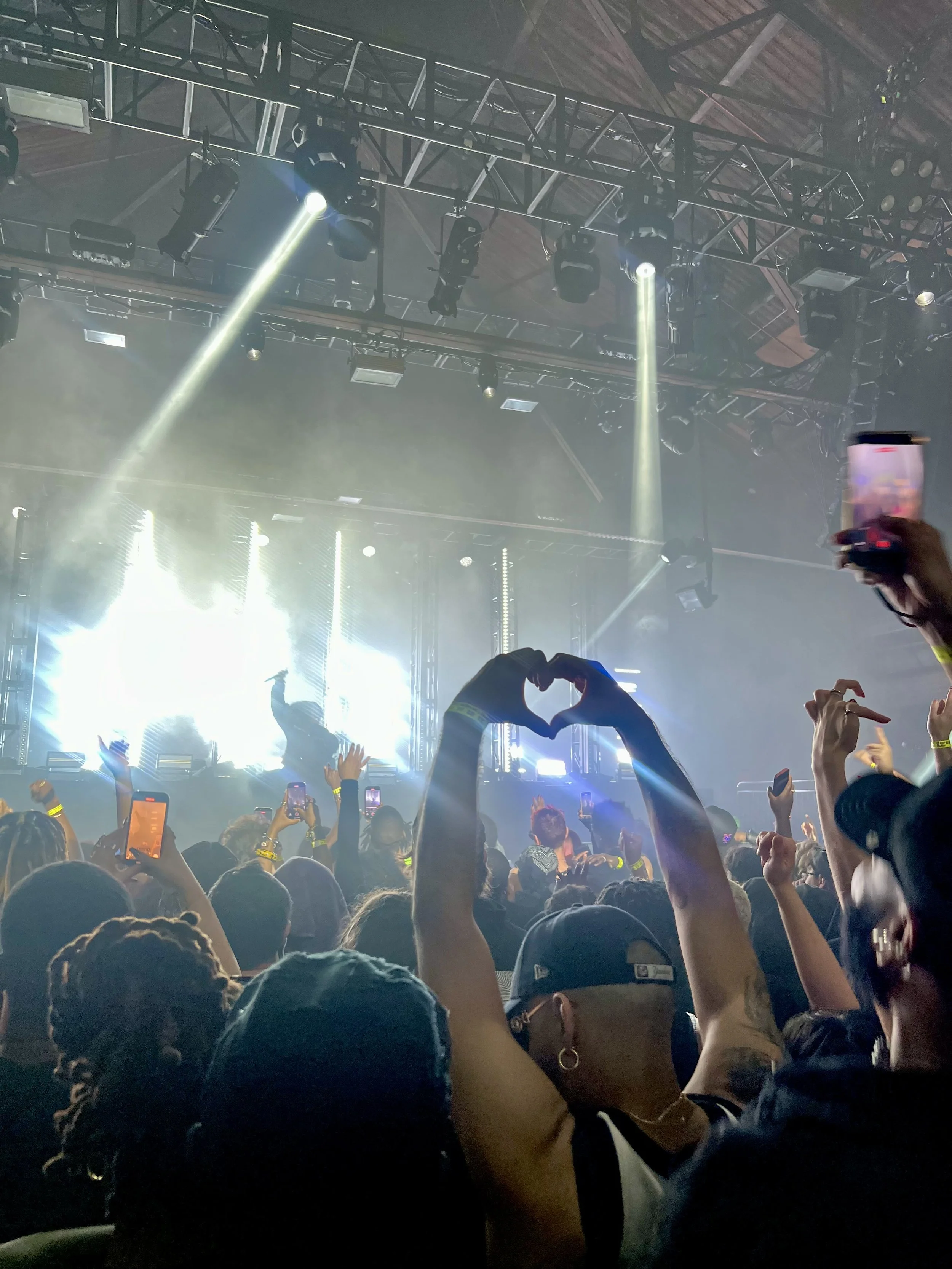
The desire to preserve a memory can ironically diminish the depth of the experience itself. How many of us are left with digital artifacts but a muted personal account. There are so many events I remember more-so from revisiting the photos than from the actual moment in time. Do the photos and videos help to etch the memory more clearly? To test this theory, for a couple of months I totally stopped. For a while, I started going to concerts. I travelled, went to yoga classes, I went on dates, had belly laughs with family and friends with no proof.
This “conflict” clearly carries genuine upsides. Documenting life offers us a powerful tool for self-reflection, mindfulness, and connection. But how priceless is it to look through that album to see photos visiting the friend you share matching tattoos with, that one weekend in New Orleans? Or that faint memory of that brief moment on your 19th birthday, where you and your friends ended up in some randos apartment off Prince Street after a swanky dinner. A memory only memorialized through photographic relic, that and the fact that we lived to tell the story. So where is the middle ground? Gen-Z has taken online presence to newer heights with 24-hour streaming. Older millennials critique the need for that level of surveillance and the entertainment value of it all. I’ve learned that there is a middle ground and that somewhere in there it allows us to renew our agreement where we still get to witness beauty in the everyday and still share meaningful content with others.
It is important to note that neither impulse is inherently superior. What a compliment for someone to listen as you speak and to laugh at your jokes, corny or not, while they look into your eyes? Ironically, wouldn’t you say it’s an honor to be caught candidly by someone who sees your “good side”, in a frame that is flattering? I've learned that living in the moment ironically allows for moments to wash over us even if they eventually fade from memory. Modern living is where documenting without living is turning the present into a commodity. We don’t even realize how we end up sacrificing moments we’ll never get back. This dynamic balance lies in recognizing that while documenting our fabulous or not so fabulous lives can aide in our appreciation of life, it relies entirely on our willingness to put the recording devices down and simply exist after a while. Life is in fact meant to be lived, and we ought to take more advantage of what we’ve been given on Earth and sometimes that includes making a TikTok to really appreciate the beach, and then signing out.
People are tired. And, what does that look like? It looks like more IG browsing than user uploads. It looks like more gawking, zooming in, searching for the imperfections in seemingly perfect shots. With too many behaviors to name, the only way to silence the noice is with the numbers. The metrics, the analytics, how they tell a different story. Studies show how analytics prove how audiences do respond more favorably to what they deem as authentic content. We, the viewers, have developed a sharper eye for forced spontaneity, the traditional influencer model, dependent on staging and monetizing daily routines. And even if you don’t participate in it, are you a part of the many facing unprecedented fatigue? To survive this shift, content creators are forced to make a choice: either pivot toward passive documentation, content that respects the flow of real life or step away from the highlight reel entirely.
You can also just post whatever you want, whenever you want. Or sign out.
Trillkitchen is still home of the blog, under the parent company INDOR Studio and will continue, periodically, to share life in a way that is receptacle to even one of you. After all, this is still an online community, and adults need villages too. I’d like to hear your opinion on this topic. How have you experienced the changes in this digital landscape as a creator of content or as a viewer?
